
AT A GLANCE
Wearable technology can make casino interfaces more immersive and convenient, but it does not improve the mathematical odds of any game.
- Smartwatches can display alerts, account controls and limited game interactions.
- VR headsets create three-dimensional casino rooms, while haptic devices add vibration or touch feedback.
- Biometric data may improve authentication, but it also creates privacy and security risks.
- Battery life, compatibility and regulation remain more restrictive than the marketing suggests.
The practical value depends on the device, supported software and the safeguards available in your jurisdiction.
What Is Wearable Tech in Online Casinos?
Wearable tech in online casinos means using devices worn on the body, such as smartwatches, fitness trackers, smart glasses or virtual reality (VR) headsets, to receive information or interact with casino software. These devices connect to a phone, computer or networked platform rather than changing the underlying game mathematics.
Smartwatches and Wrist-Based Casino Alerts
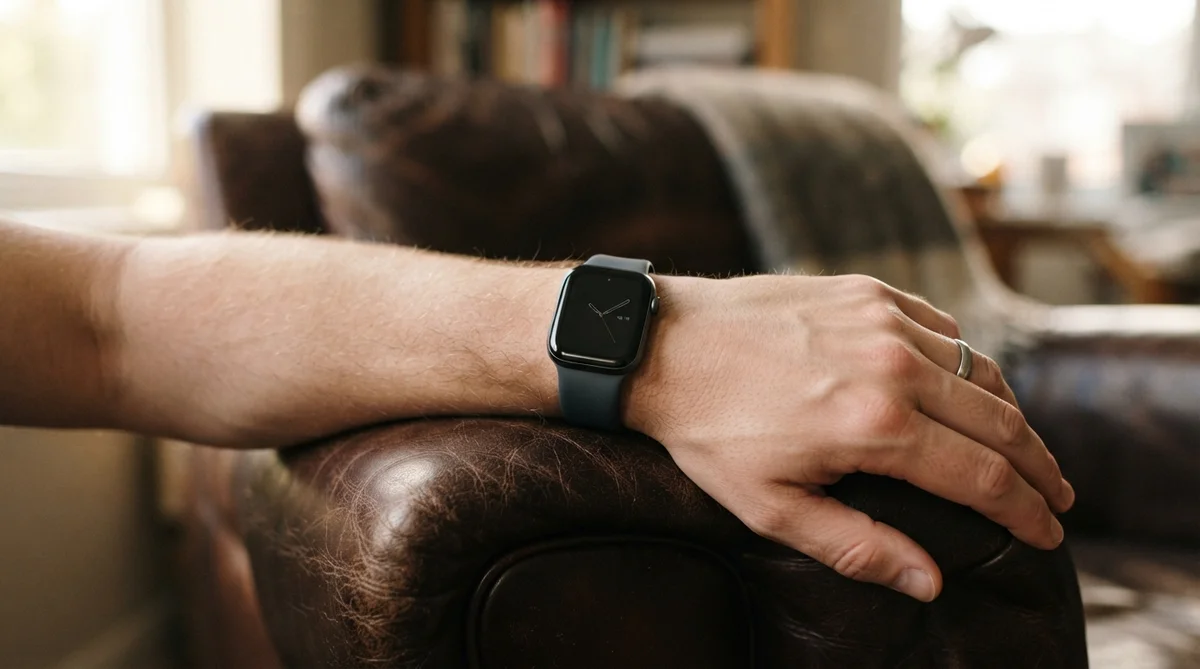
Smartwatches are most useful as secondary screens. A supported service may send notifications about account activity, game events, session reminders or verification requests to your wrist.
Some interfaces may allow simple actions, such as confirming a limit or opening a game session, but a small display is poorly suited to reading detailed rules or checking payout tables. A vibration can tell you that something happened; it cannot tell you whether the event was favourable in the long run.
Fitness Trackers and Biometric Data
Fitness trackers can record movement, heart rate and periods of inactivity, although the availability and accuracy of these features vary by device. In a casino context, such data could support break reminders or identity checks.
Biometric information is sensitive because it is difficult to replace after exposure. Heart-rate readings can also be misleading: excitement, exercise, caffeine and illness may produce similar signals, so they should not be treated as a reliable measure of gambling risk.
Smart Glasses, VR Headsets, and Haptic Devices
Smart glasses can place digital information over your surroundings, while VR headsets replace your visual environment with a simulated casino. Haptic devices use vibrations or pressure to represent actions such as a card deal, wheel spin or button press.
These effects change the sensory experience, not the random number generator (RNG), card sequence or house edge. For a useful explanation of how RNG-based games produce results, see how slot machine RNGs work.
How Do Wearable Devices Change Online Casino Gameplay?
Wearables change how you receive information and control a session, rather than giving you a better strategy. Their main effects are shorter device switching, stronger sensory feedback and more data collection.
Real-Time Notifications and Account Controls
A wearable can show a deposit notification, a session timer or a responsible-gambling reminder without requiring you to open another screen. This may make account monitoring easier when the alerts are neutral and timely.
Notifications can also become a distraction if they encourage repeated checking. A sensible setup turns off promotional alerts and keeps only security, payment and limit-related messages.
Haptic Feedback for Spins, Wins, and Game Events
Haptic feedback translates software events into physical sensations. A short pulse might represent a spin, while a stronger pattern might mark a game result or notification.
The sensation has no evidential value. A frequent vibration does not mean a machine is becoming due, and a stronger pulse does not indicate a higher expected return. In slots, the relevant figures remain return to player (RTP), volatility and the actual paytable.
Personalised Experiences Using Player Data
Wearables can contribute data about device use, session length and interaction patterns. Platforms might use those signals to adjust screen layouts, accessibility controls or reminder timing.
Personalisation needs boundaries. A system that learns when you are most responsive could improve usability, but the same information could be used to intensify engagement. Read data permissions before pairing a wearable with any gambling-related application.
How Do VR and AR Work in Online Casinos?
VR creates a fully simulated environment, while augmented reality (AR) places digital elements over the physical world. Both can make online casino software feel more like a venue, but neither removes the house edge or guarantees a fair outcome beyond the platform’s tested game mechanics.
How Does VR Create Immersive Live Casino Rooms?
A VR headset can reproduce a casino floor with three-dimensional tables, dealer streams, menus and avatars. Motion tracking lets you look around and use controllers to select a table or game area.
The experience may feel more social when other users appear as avatars, but the social layer is separate from the game result. In a live dealer game, the physical cards or wheel still determine the outcome; in an RNG game, software generates it.
What Can AR Overlays Add to Mobile and Real-World Play?
AR overlays could place a digital table, odds panel or account timer into your field of view. Gesture or voice commands might eventually replace some touchscreen actions.
AR is less isolated than VR, which creates a safety concern around traffic, stairs and other hazards. You should never use an immersive interface while walking, driving or operating equipment.
How Do VR, AR, and Traditional Mobile Casino Formats Compare?
| Format | Main strength | Main limitation | Best use |
|---|---|---|---|
| Traditional mobile | Broad compatibility | Small-screen fatigue | Reading rules and account details |
| VR | Strong immersion | Headset cost and isolation | Short, controlled entertainment sessions |
| AR | Digital overlays in context | Early hardware and safety concerns | Experimental interfaces |
| Smartwatch | Fast alerts and reminders | Limited screen and controls | Notifications and session limits |
What Are the Benefits of Wearable Tech for Casino Players?
The strongest benefits are convenience, accessibility and richer sensory feedback. They are interface benefits, not financial benefits, because the expected return of a game does not improve when you use a watch or headset.
Does Wearable Tech Make On-the-Go Access More Convenient?
Yes, a wearable can reduce the need to reach for a phone, especially for account alerts and session reminders. That convenience should not become a reason to play in public, at work or during activities requiring attention.
For beginners, a larger mobile or desktop screen remains better for learning rules, comparing bets and checking RTP. You can start with casino games that are easiest to learn before considering a more complicated interface.
Can Wearables Make Gameplay More Interactive and Social?
VR avatars, spatial audio and haptic signals can make a digital table feel more present. They may also help remote users communicate in shared virtual rooms.
Greater immersion can make time pass unnoticed. Set a session duration before starting, rather than relying on a device to remind you after the experience has already become absorbing.
How Can Wearables Improve Accessibility and Hands-Free Controls?
Voice commands, enlarged visual elements, vibration alerts and gesture controls may help users who find conventional touchscreens difficult. Accessibility depends on the software design, not merely on owning compatible hardware.
Hands-free control should include confirmation steps for payments and bets. A mistaken gesture or voice command should not create an irreversible transaction.
What Are the Privacy, Security, and Responsible Gambling Risks?
Wearables add sensors, wireless connections and another account endpoint, so they expand both the convenience and the attack surface. They can also make gambling more immediate, which increases the value of firm limits and deliberate breaks.
How Do Biometric Data and Personal Privacy Matter?
Before pairing a device, check which data the application requests, where it is stored and whether permission can be withdrawn. Heart-rate, location and movement data should not be collected by default unless they serve a clear purpose.
Regulators treat personal data and gambling safeguards as separate responsibilities. The UK Gambling Commission expects operators in its jurisdiction to protect customers and provide safer-gambling controls, but that does not make every third-party wearable application trustworthy.
How Do Device Security, Payments, and Account Verification Work?
Use a device passcode, current operating-system updates and multi-factor authentication where available. Avoid approving payments or identity checks from an untrusted watch, shared headset or public wireless network.
Identity checks can involve documents and account information, so read the relevant privacy notice before submitting anything. K4 Klub explains the process in its guide to casino KYC verification and withdrawals.
How Can You Prevent Distraction and Excessive Gambling?
Set a deposit limit, a time limit and a stop point before opening a game. Turn off promotional notifications and do not treat physiological alerts as permission to continue.
GamCare advises people to seek support when gambling stops feeling controlled, while the UK Gambling Commission describes self-exclusion and limit-setting as part of safer gambling practice. If limits are repeatedly broken, use self-exclusion and contact a recognised support service rather than trying to recover losses.
What Limits Wearable Tech Adoption Today?
Adoption remains limited because wearable hardware is smaller, less powerful and less universally supported than phones and computers. The most ambitious features also require software, network capacity and regulatory approval to line up.
What Do Compatibility, Battery Life, and Connectivity Restrict?
A watch may work with one operating system but not another, while a VR application may require a particular headset, controller or connection speed. Motion tracking and high-resolution graphics also consume battery quickly.
Connection drops create a poor interface and can interrupt live dealer streams. They should never be treated as evidence that a game result can be cancelled or repeated.
How Do Cost and Availability of Supported Casino Games Matter?
Buying a headset or smartwatch does not guarantee access to compatible casino software. Supported games may be fewer than the mobile catalogue, and some features may remain experimental.
Compare the complete cost, including the device, replacement accessories, required phone and connectivity. A conventional screen may deliver clearer rules and account records at a lower cost.
How Do Regulation and Regional Restrictions Affect Wearables?
Gambling law and product availability vary by country, state and territory. A wearable application available in one market may be blocked, unlicensed or unavailable in another.
Check your local regulator’s public registry before using any real-money service, and verify that the operator’s licence covers the products offered. Technology does not override local rules or create a licence where none exists.
How Should You Choose Wearable Tech for Online Casino Gaming?
Choose the device for security, compatibility and control features first, then consider immersion. A device that looks impressive but cannot display limits or protect account access is a poor fit for responsible use.
Which Features Should You Look For?
- Clear controls: session timers, deposit limits and self-exclusion access should be easy to find.
- Strong security: use a passcode, device encryption and multi-factor authentication.
- Privacy controls: review permissions for location, health and biometric data.
- Reliable hardware: check battery life, updates, connectivity and return terms before buying.
How Do You Check Casino, Device, and VR Compatibility?
Confirm the supported operating system, headset model, controller and connection requirements before installing anything. Then check that the service is licensed for your jurisdiction and that its game rules, RTP information and complaint route are visible.
Independent testing can help assess game fairness, but an audit does not endorse an operator or remove your need to check licence details. The European Gaming and Betting Association and eCOGRA publish industry information, but you should still rely on your local regulator’s registry for current licensing status.
What Is a Safe Setup for Responsible Use?
Enable device locking, disable promotional alerts and set limits before linking an account. Keep the headset away from children, pets and anyone who might activate a control accidentally.
Use a visible clock or timer outside the immersive display, take regular breaks and stop if gambling interferes with sleep, work or finances. For practical guidance, see deposit limits and self-exclusion tools.
What Is the Future of Wearable Tech and Online Casinos?
The likely future is not a device that defeats casino mathematics. It is a more connected interface that uses voice, gesture, virtual spaces and personal data, with the central question being whether safety controls develop as quickly as engagement features.
- AI-powered personalisation: systems may adjust layouts, reminders and accessibility settings, but they should not use private signals to pressure longer sessions.
- Gesture, voice, and biometric controls: these could simplify navigation and authentication, while requiring confirmation for bets and payments.
- Connected VR casinos and social gaming: shared virtual rooms may add conversation and presence, although immersion can blur time and spending awareness.
- Wearables designed to support safer gambling: inactivity prompts, cooling-off reminders and real-time limit warnings could make the technology more protective than persuasive.